


Last updated: June 2026.
📖 In this guide, you'll learn:
Free weekly crypto tips for Africa:
- How big is African crypto in 2026?
- Africa isn’t one crypto story. It’s three.
- Driver 1 — Currency hedging: crypto as a dollar substitute
- Driver 2 — Remittances & mobile money: strong currency, high adoption
- Driver 3 — Institutional & regulated growth
- The 14-country comparison
Key stats you can cite (free to use with a link to this page)
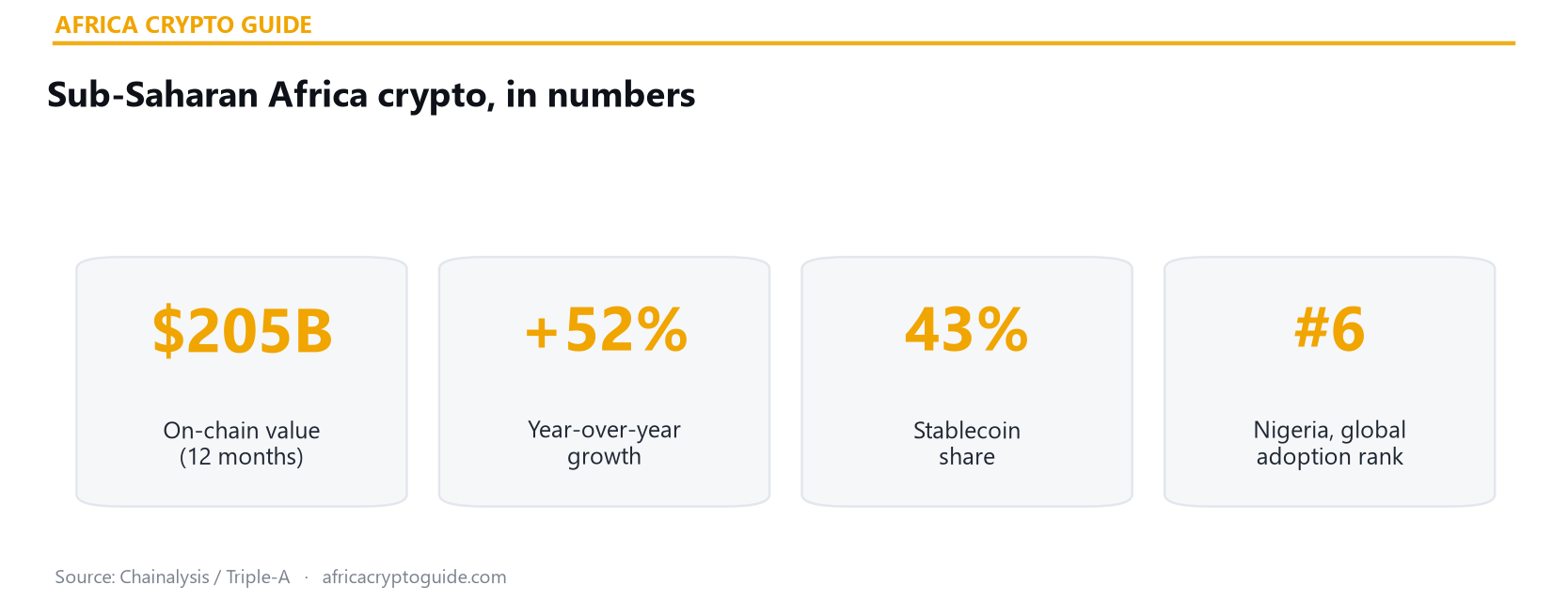
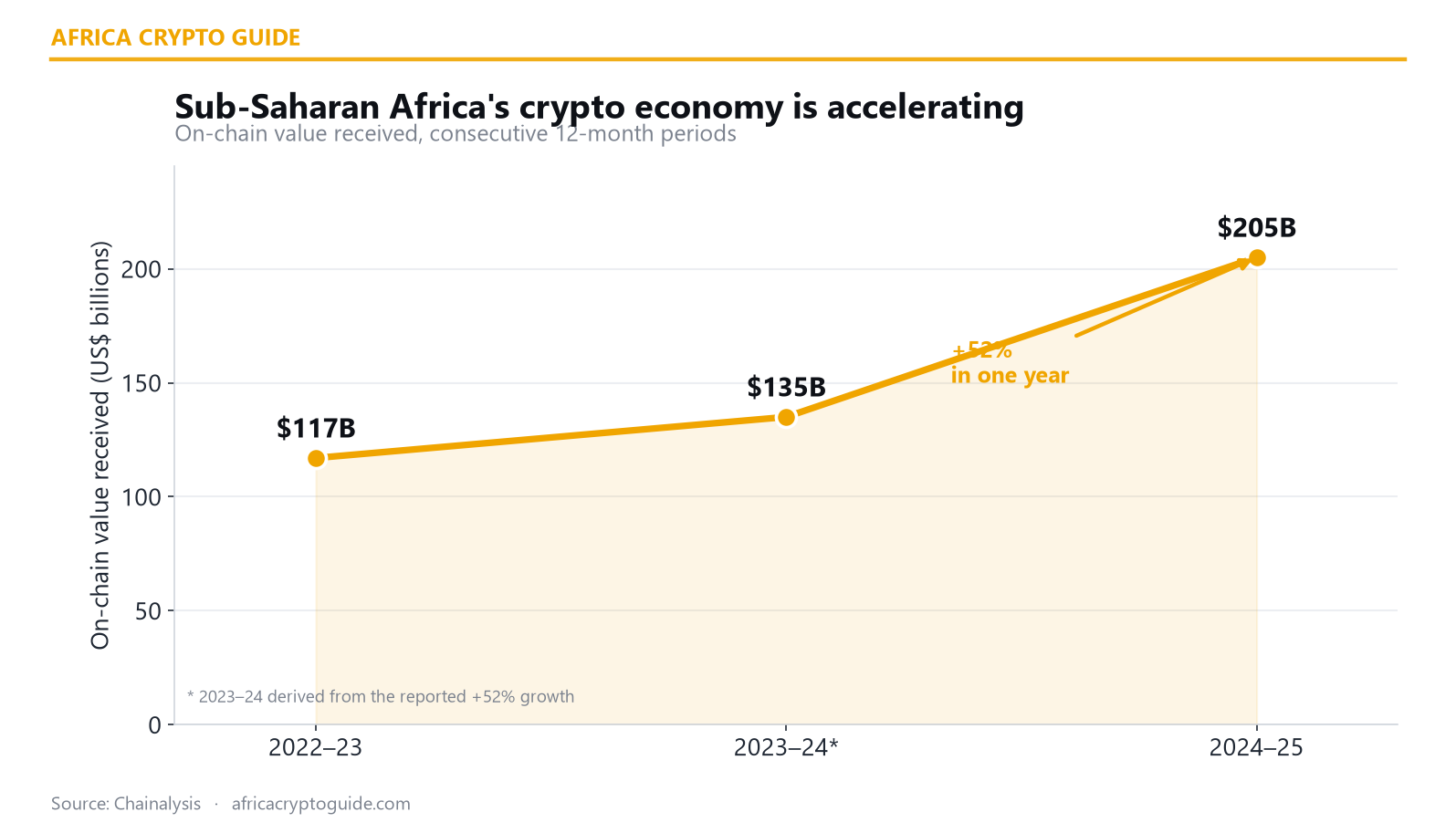
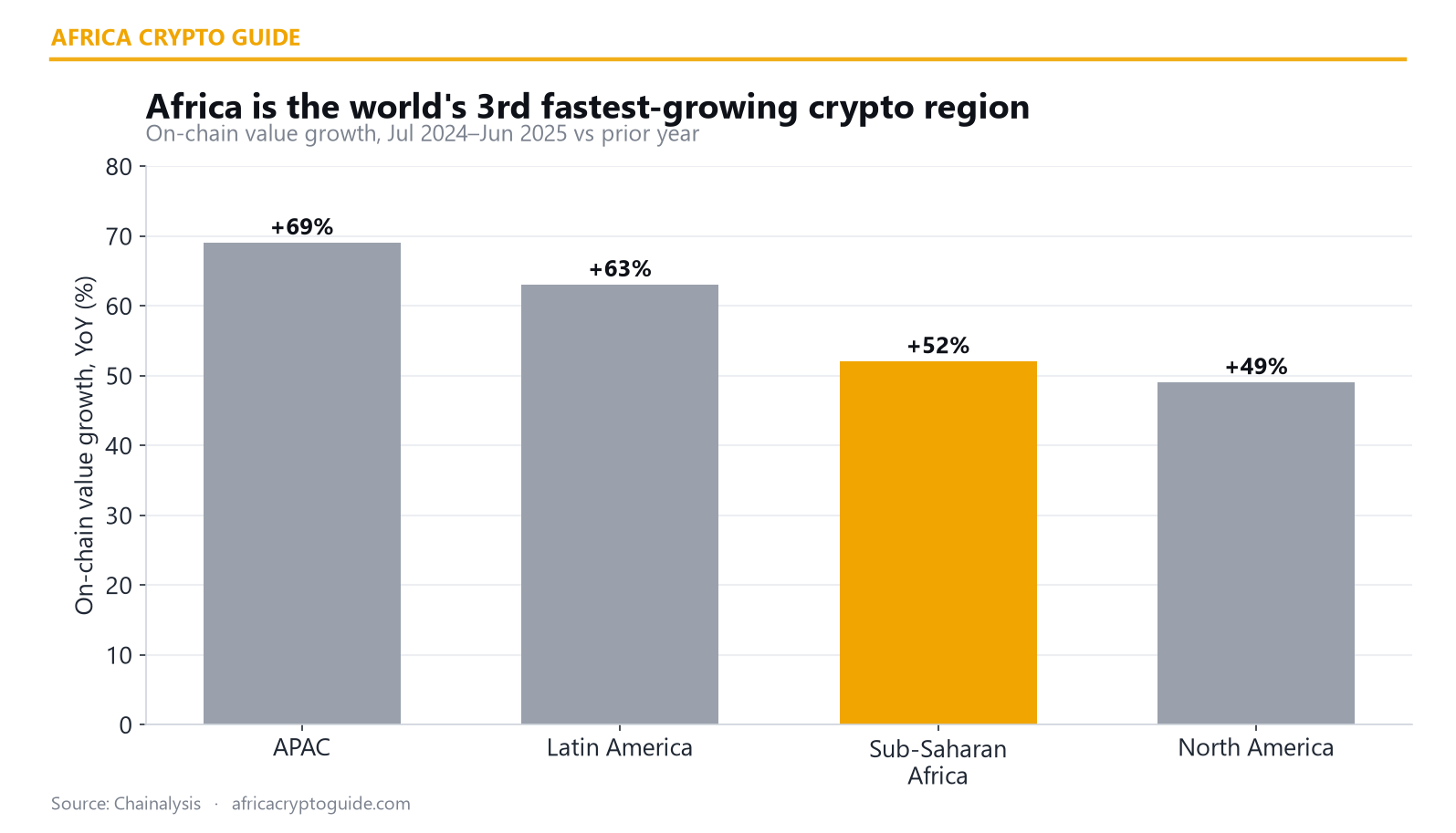
- Sub-Saharan Africa received $205B+ in on-chain crypto value (Jul 2024–Jun 2025), up 52% year-on-year — the world’s 3rd fastest-growing region. (Chainalysis)
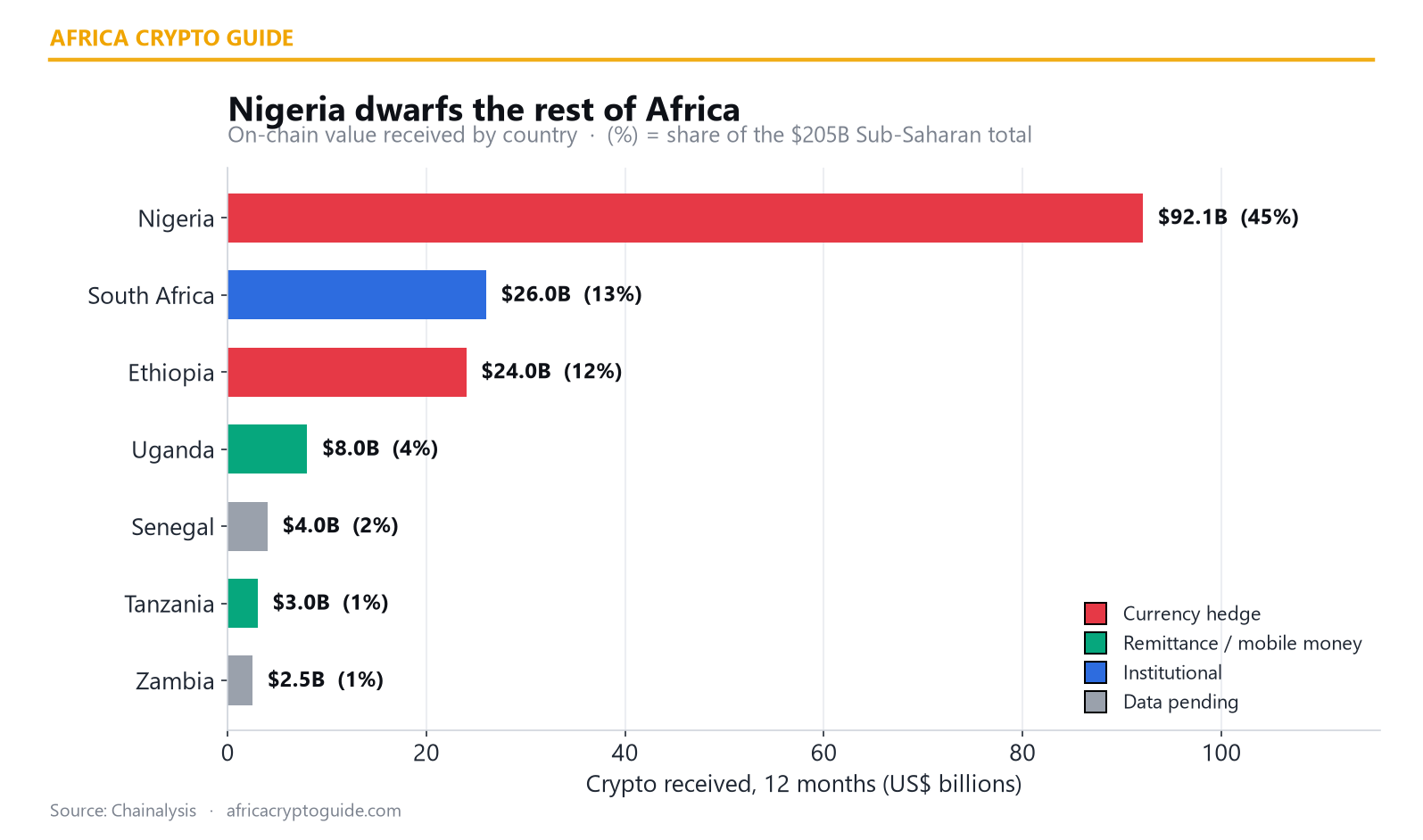
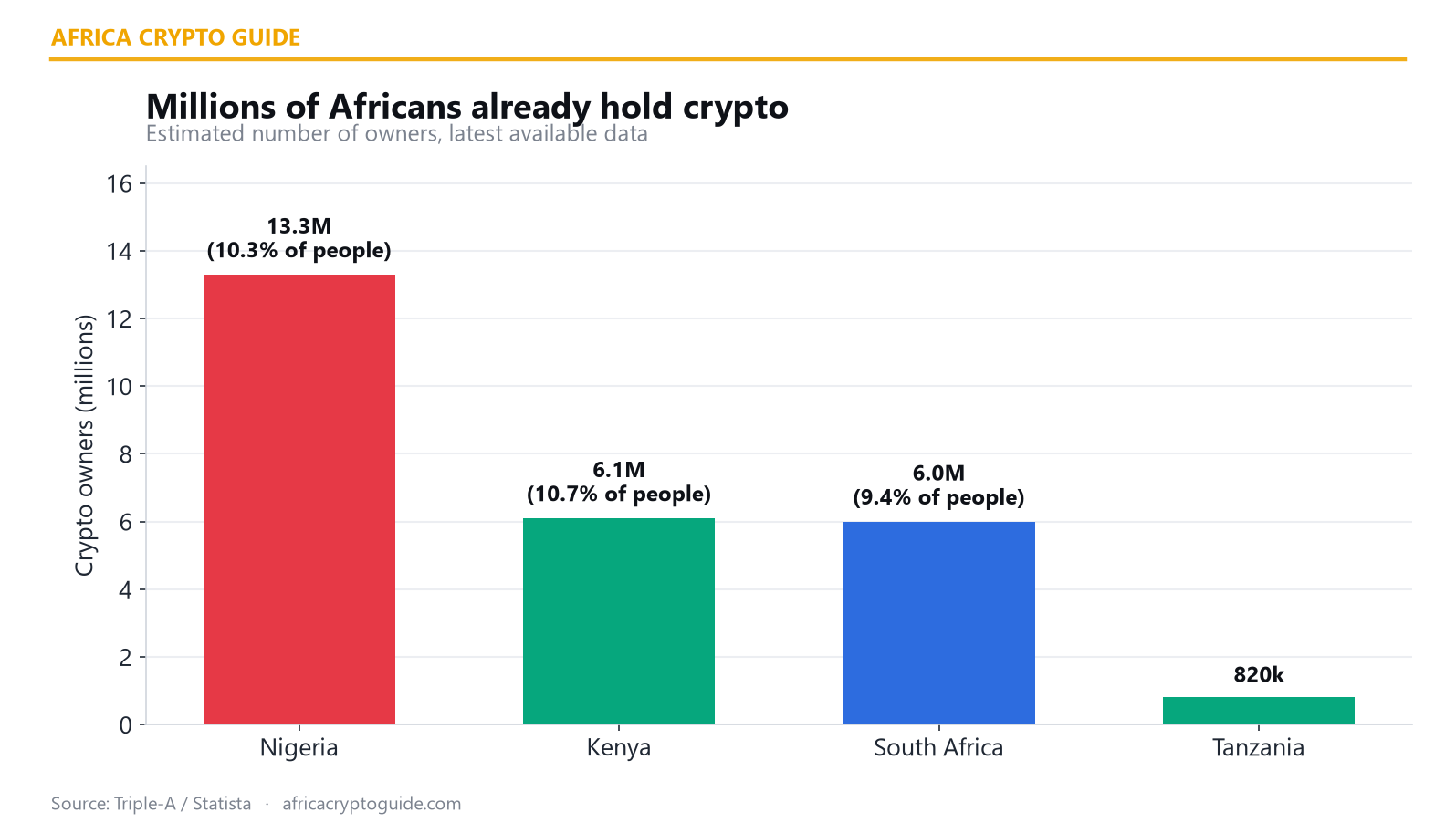
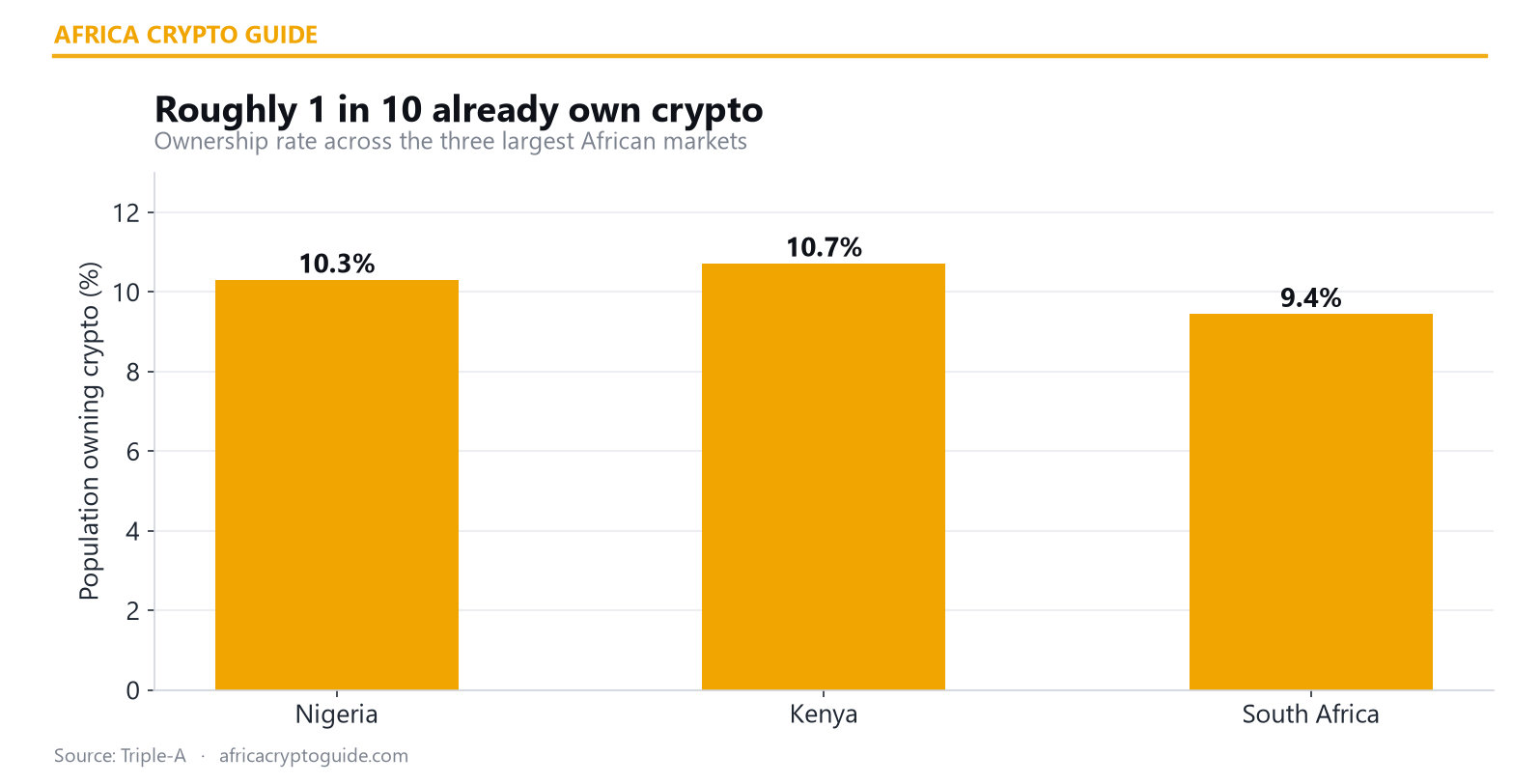
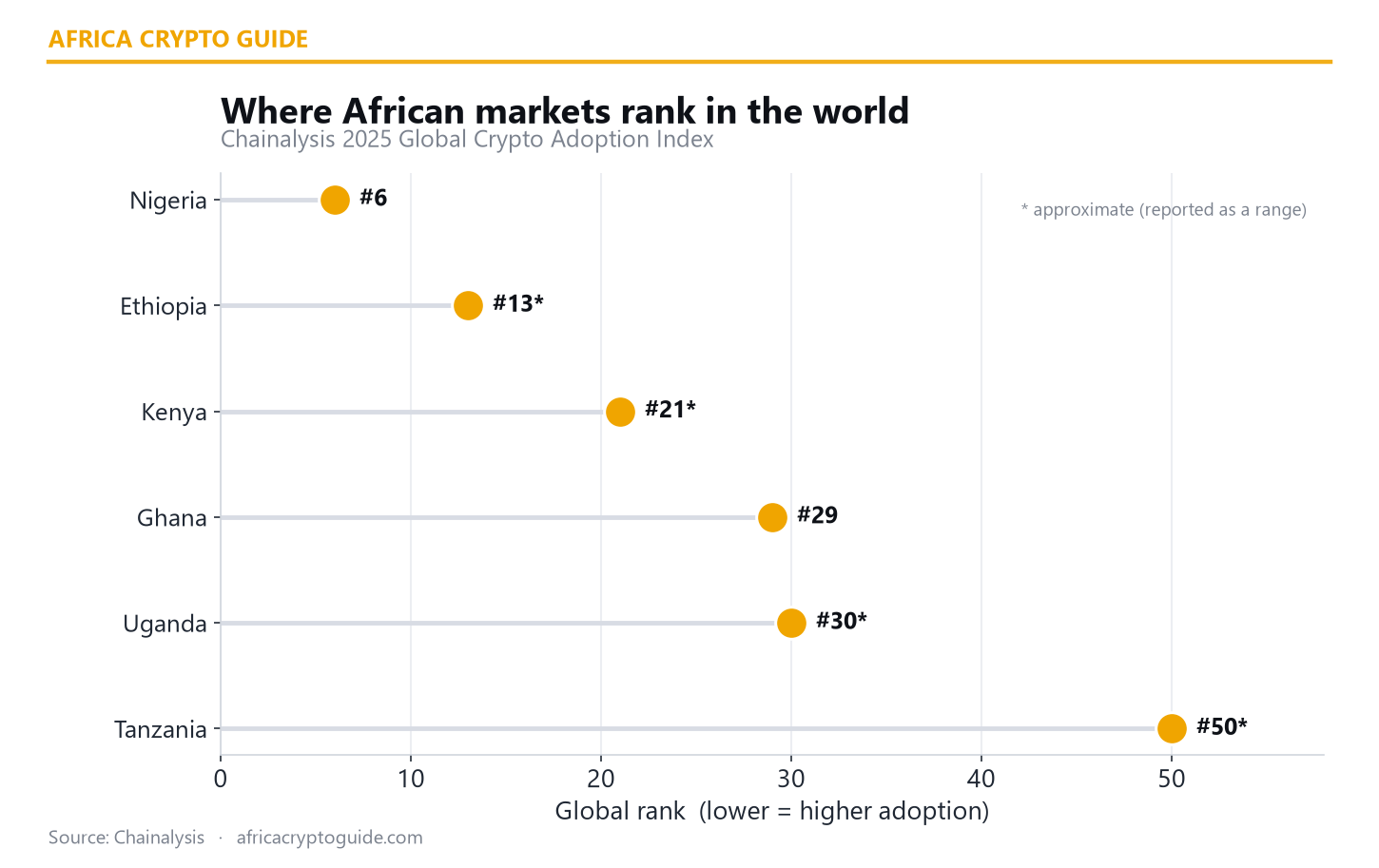
- Nigeria leads Africa with $92.1B received and ~13.3M owners (10.3% of people), ranking #6 globally. (Chainalysis / Triple-A)
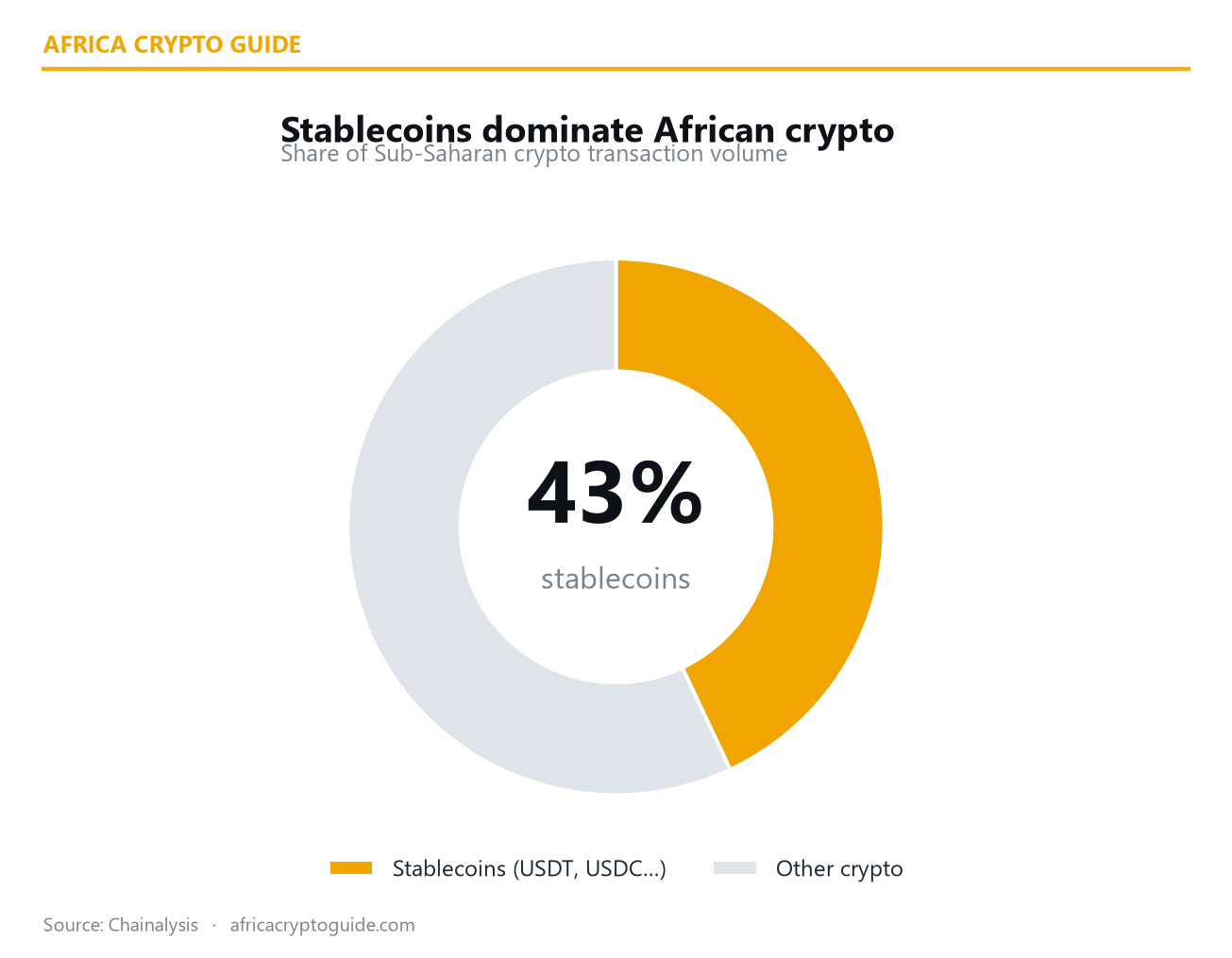
- Stablecoins make up ~43% of the region’s crypto volume — used for savings and remittances. (Chainalysis)
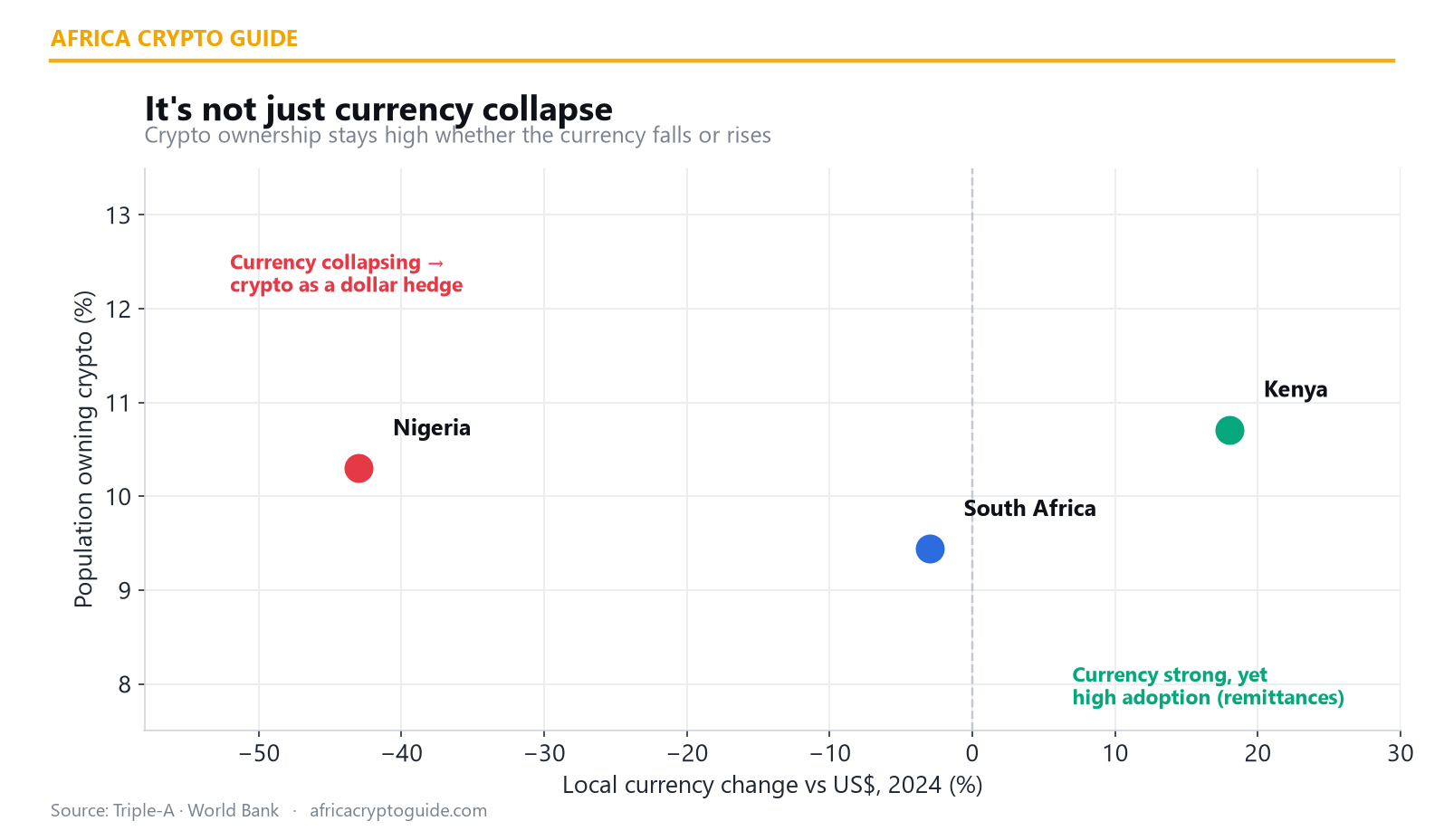
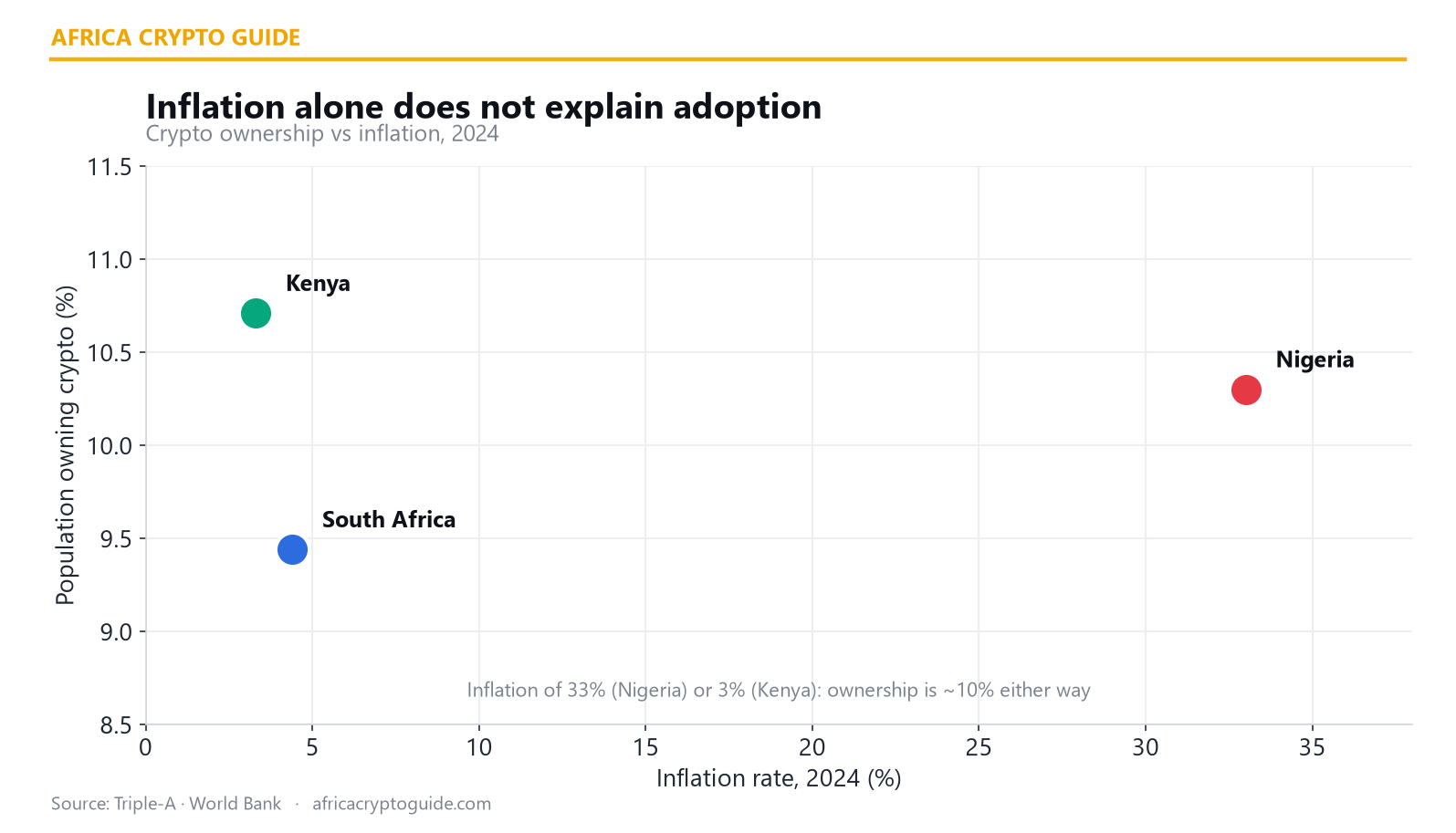
- Kenya’s shilling rose ~18% in 2024, yet 10.7% of Kenyans hold crypto — adoption isn’t only about currency collapse. (World Bank / Triple-A)
- Ethiopia hit ~$24B in crypto activity as the birr lost 50%+ of its value. (Chainalysis / World Bank)
How big is African crypto in 2026?
Sub-Saharan Africa received over $205 billion in on-chain value between July 2024 and June 2025 — up 52% year-on-year, the world’s third fastest-growing region behind APAC and Latin America. Nigeria alone accounts for $92.1B, nearly triple the next country.
Africa isn’t one crypto story. It’s three.
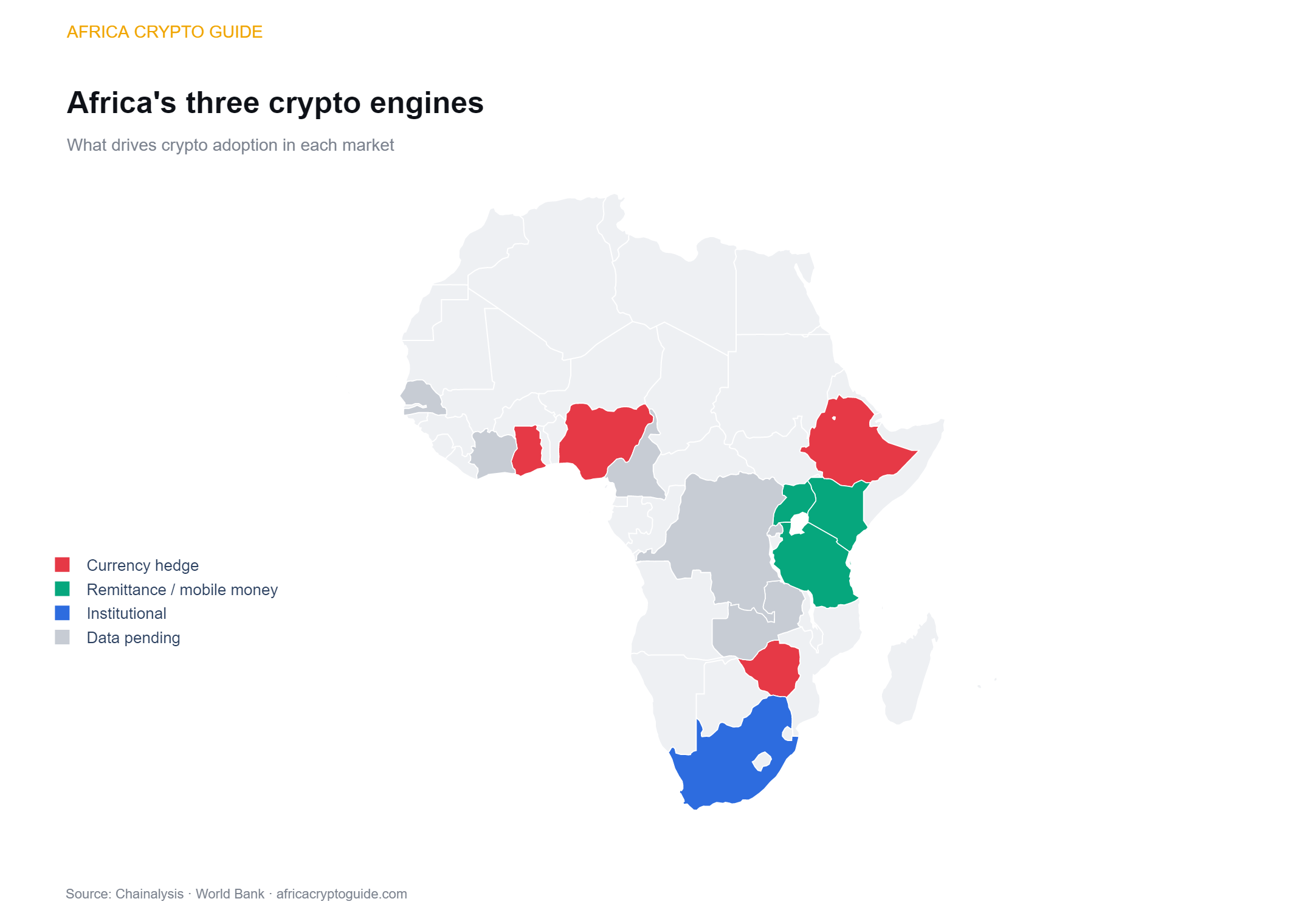
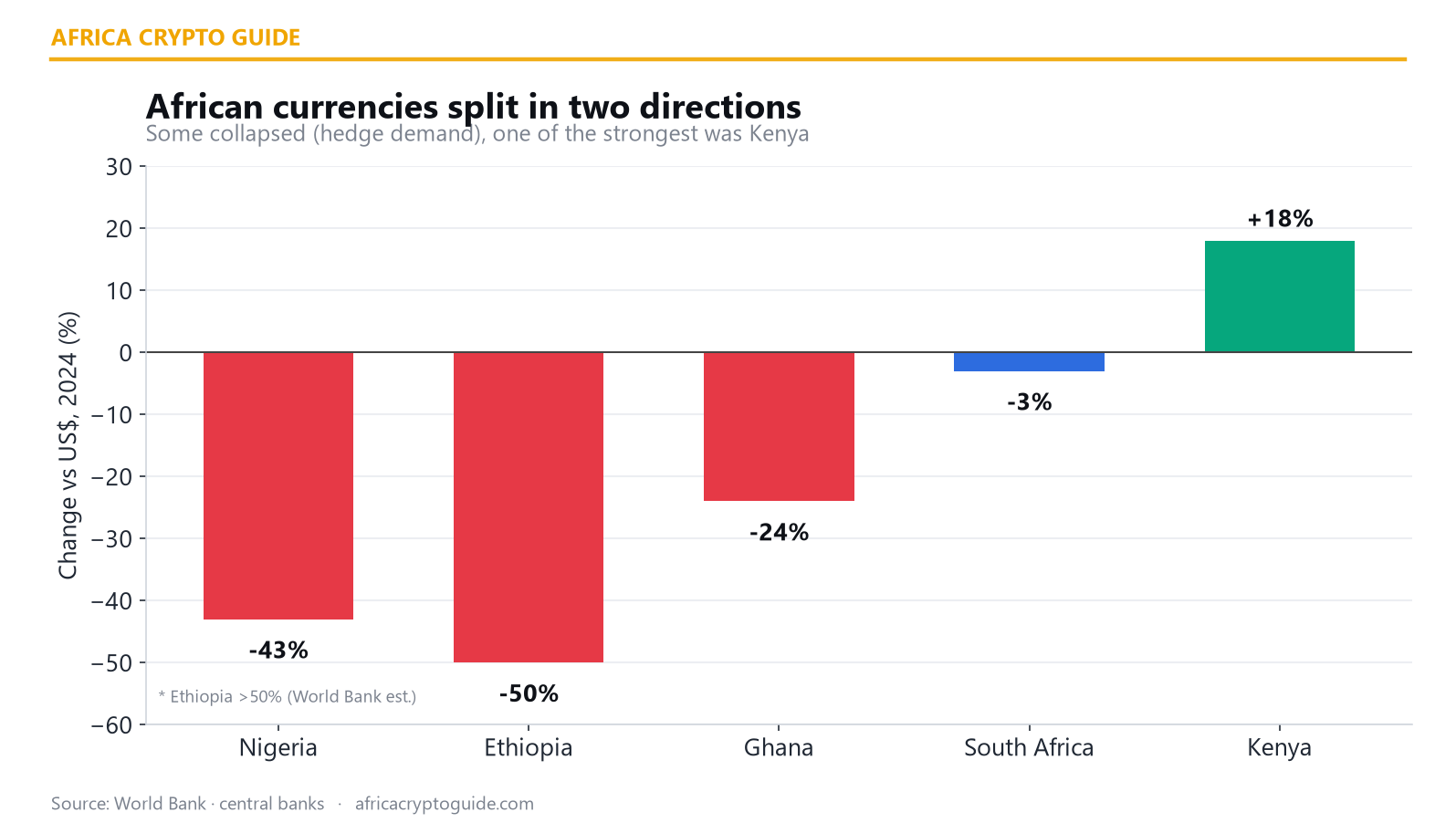
The usual headline is simple: African currencies are collapsing, so people are buying crypto. It’s half true — and the half that’s wrong is the interesting part. Put 14 African markets side by side and the “currency collapse” explanation breaks down. Nigeria’s naira fell 43% and crypto boomed. But Kenya’s shilling was the strongest-performing currency in Africa in 2024, and Kenyans still adopted crypto at almost the same rate.
Driver 1 — Currency hedging: crypto as a dollar substitute
Where the local currency is collapsing, people use stablecoins (mostly USDT) to hold value in dollars. Nigeria (naira −43%, inflation ~33%) saw $92.1B on-chain and ranks #6 worldwide. Ethiopia‘s birr fell 50%+ after the 2024 float, and crypto activity surged to ~$24B — into the global Top 15. Ghana (cedi −24%) and Zimbabwe (the ZiG) follow the same logic: crypto as monetary self-defense.
Driver 2 — Remittances & mobile money: strong currency, high adoption
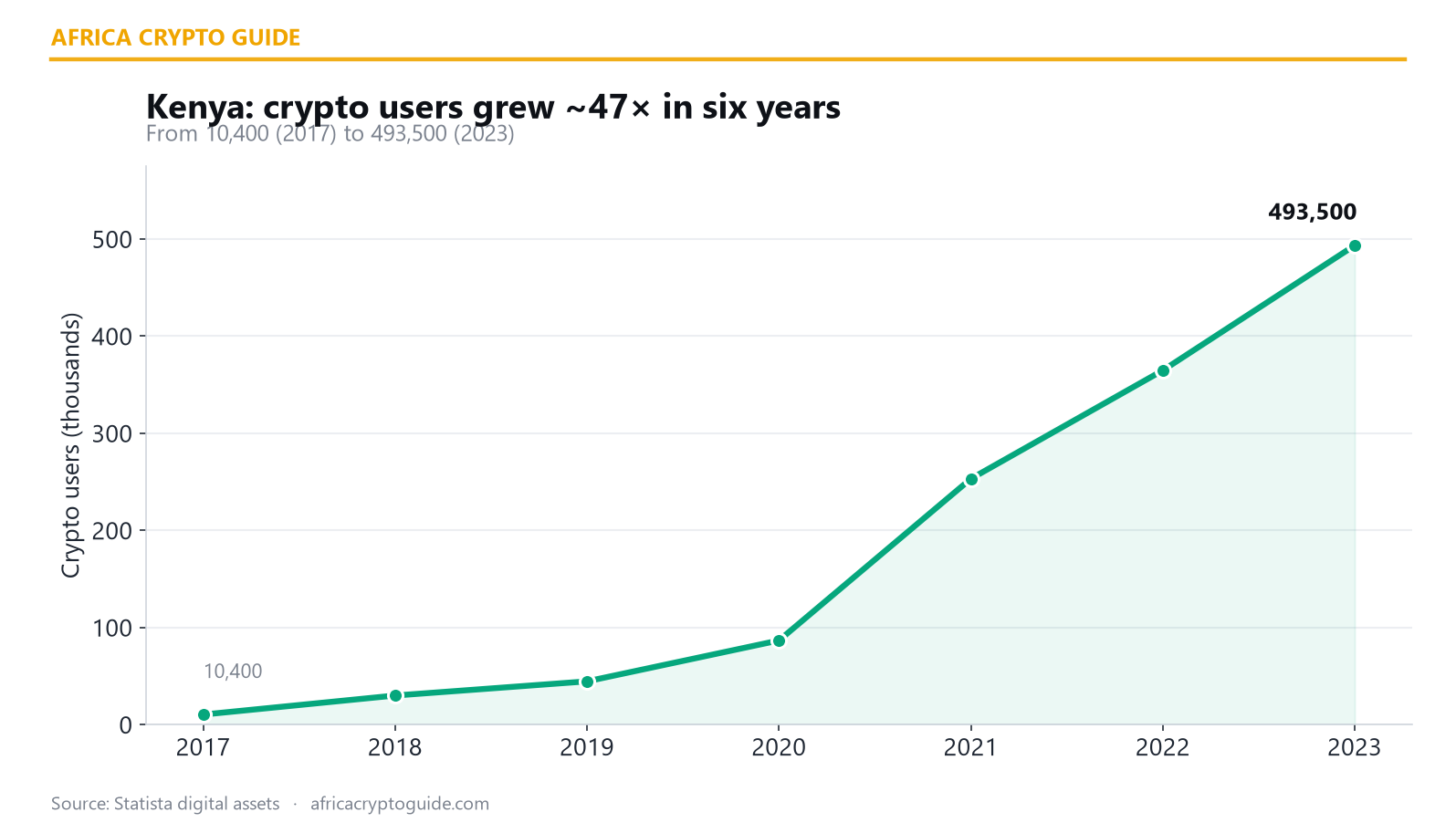
Here the currency is stable or rising, yet adoption is high — because the rails already exist (M-Pesa, MTN MoMo, Airtel Money) and the use case is payments, not hedging. Kenya‘s shilling rose ~18% in 2024 with inflation down to ~3.3%, yet 10.7% of Kenyans (~6.1M) hold crypto. Uganda‘s shilling appreciated, and crypto activity still hit ~$8B. Tanzania‘s DeFi wallets grew 6.8× to 820,000.
Driver 3 — Institutional & regulated growth
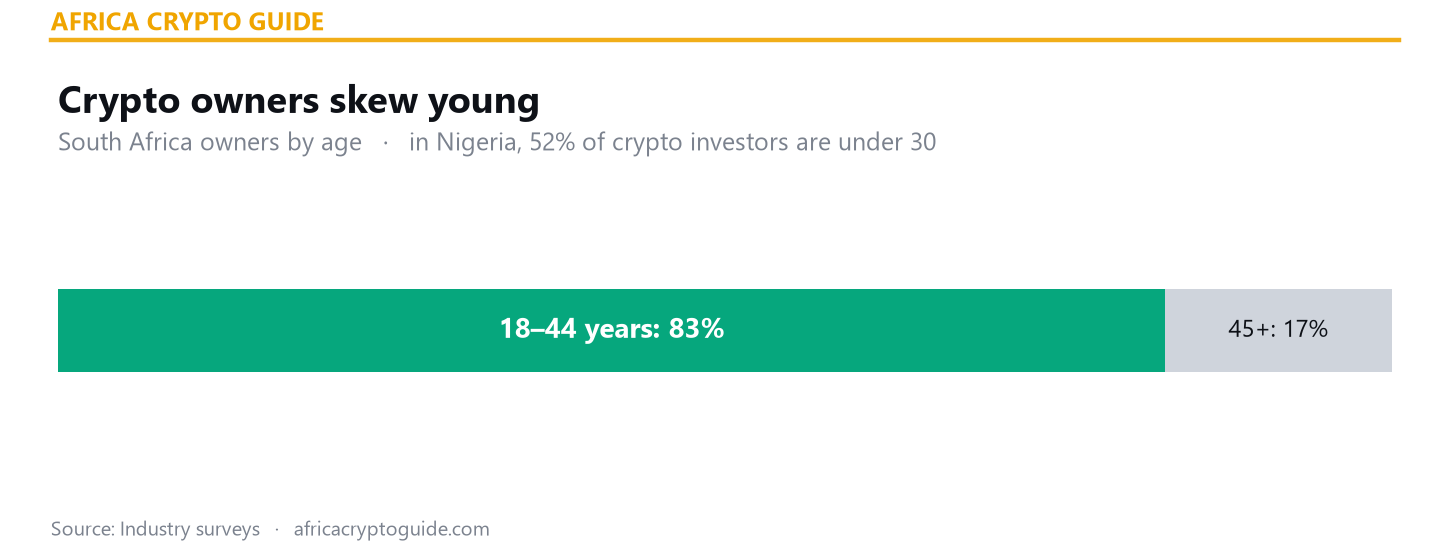
South Africa is the outlier: the FSCA licenses crypto providers, banks participate, and owners skew high-income and highly educated (46% hold a degree). The rand slipped only ~3% in 2024 — adoption here is investment-led, not survival-led.
The 14-country comparison
The full picture, country by country. Where reliable public data does not exist for smaller markets, we mark it N/A rather than guess.
| Country | Owners | Ownership % | On-chain value | Index rank | Currency 2024 | Driver |
|---|---|---|---|---|---|---|
| Nigeria | ~13.3M | 10.3% | $92.1B | #6 | −43% | Hedge |
| Ethiopia | N/A | N/A | ~$24B | Top 15 | −50%+ | Hedge |
| Ghana | ~3M* | ~17%* | N/A | #29 | −24% | Hedge |
| Zimbabwe | ~240k | 1.4% | N/A | N/A | ZiG −50% | Hedge |
| Zambia | ~220k | 1.0% | ~$2.5B | N/A | Kwacha weak | Hedge |
| Kenya | ~6.1M | 10.7% | ~$3.3B | Top 20 | +18% | Remittance |
| Uganda | N/A | N/A | ~$8B | Top 30 | appreciated | Remittance |
| Tanzania | ~0.82M | N/A | ~$3B | Top 50 | N/A | Remittance |
| Senegal | ~230k | 1.3% | ~$4B | N/A | CFA (peg) | Remittance |
| Cote d’Ivoire | ~540k | 1.9% | N/A | N/A | CFA (peg) | Remittance |
| Cameroon | ~480k | 1.8% | N/A | N/A | CFA (peg) | Remittance |
| Rwanda | ~208k | 1.5% | N/A | N/A | RWF managed | Remittance |
| DR Congo | N/A | N/A | N/A | N/A | CDF | Remittance |
| South Africa | ~6M | 9.4% | ~$26B | ~#30 | −3% | Institutional |
Methodology & sources
- Adoption value & index ranks: Chainalysis 2025 Geography of Cryptocurrency.
- Ownership rates & owner counts: Triple-A, cross-checked with Statista.
- Currency moves & inflation: World Bank (Africa’s Pulse), IMF, national central banks.
Free to use & cite
You’re welcome to reuse these charts and figures with attribution. Suggested credit:
“Source: Africa Crypto Guide — africacryptoguide.com/africa-crypto-adoption-2026”
Country data deep-dives
Full statistics, charts and context for each major market:
- Nigeria crypto statistics 2026
- Kenya crypto statistics 2026
- South Africa crypto statistics 2026
- Ethiopia crypto statistics 2026
- Ghana crypto statistics 2026
- Uganda crypto statistics 2026
- Tanzania crypto statistics 2026
- Zimbabwe crypto statistics 2026
- Senegal crypto statistics 2026
- Cote d’Ivoire crypto statistics 2026
- Cameroon crypto statistics 2026
- Rwanda crypto statistics 2026
- Zambia crypto statistics 2026
- DR Congo crypto statistics 2026
Choosing where to trade
If you’re ready to act on this, our country guides cover the exchanges that actually work locally, fees, KYC and funding:
- Best crypto exchange in Nigeria
- Best crypto exchange in Kenya
- Best crypto exchange in South Africa
- All country crypto guides
{“@context”: “https://schema.org”, “@type”: “Dataset”, “name”: “Africa Crypto Adoption 2026 — 14-Country Data”, “description”: “Crypto ownership, transaction volume, adoption-index ranks and currency moves across African markets in 2026.”, “url”: “https://africacryptoguide.com/africa-crypto-adoption-2026/”, “creator”: {“@type”: “Organization”, “name”: “Africa Crypto Guide”, “url”: “https://africacryptoguide.com/”}, “license”: “https://africacryptoguide.com/africa-crypto-adoption-2026/”, “keywords”: [“africa crypto adoption”, “cryptocurrency statistics africa”, “stablecoins africa”], “isAccessibleForFree”: true}
(function(){
document.querySelectorAll(‘.acg-copyimg’).forEach(function(b){b.addEventListener(‘click’,function(){
var o=b.textContent;
fetch(b.getAttribute(‘data-img’)).then(function(r){return r.blob();}).then(function(blob){
return navigator.clipboard.write([new ClipboardItem(Object.fromEntries([[blob.type,blob]]))]);
}).then(function(){b.textContent=’✓ Copied!’;setTimeout(function(){b.textContent=o;},1600);})
.catch(function(){b.textContent=’Copy failed’;setTimeout(function(){b.textContent=o;},1600);});
});});
document.querySelectorAll(‘.acg-copyembed’).forEach(function(b){b.addEventListener(‘click’,function(){
var o=b.textContent;
navigator.clipboard.writeText(b.getAttribute(‘data-embed’)).then(function(){b.textContent=’✓ Embed copied!’;setTimeout(function(){b.textContent=o;},1600);});
});});
})();
📊 Cite this data
Journalists and researchers are welcome to reference these figures and embed the charts above, with attribution to Africa Crypto Guide.
Suggested credit: “Africa Crypto Adoption 2026: The 14-Country Data Report, Africa Crypto Guide, 2026, https://africacryptoguide.com/africa-crypto-adoption-2026/”
Want More Crypto Tips for Africa?
Best exchanges, P2P strategies, and payment methods for your country - delivered free.
No spam. Unsubscribe anytime.